


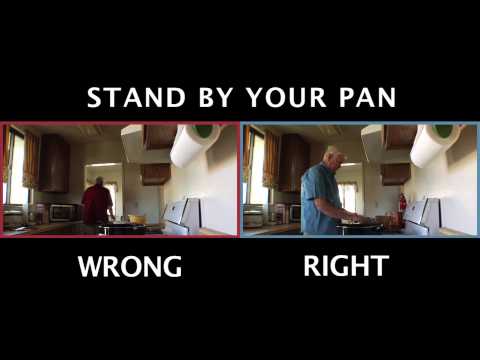
Put A Lid On Cooking Fires – Fire Prevention Week October 6 – 12, 2013
October is Fire Prevention Month and “Prevent Kitchen Fires” is this year’s message. Cooking brings family and friends together, provides an outlet for creativity and can be relaxing. But did you know that cooking fires are the number one cause of home fires and home injuries?
According to the National Fire Protection Association, unattended cooking was a factor in 34% of reported home cooking fires and 2/3 of home cooking fires started with ignition of food or other cooking materials on the stovetop.
Microwave ovens are one of the leading home products associated with scald burn injuries not related to fires. Nearly half of the microwave oven injuries seen at emergency rooms in 2011 across the country were scald burns.
By following a few safety tips, you can prevent these fires:
“Cook With Caution”
Be on alert! If you are sleepy or have consumed alcohol, don’t use the stove or stovetop.
- Stay in the kitchen while you are frying, grilling, or broiling food. If you leave the kitchen for even a short period of time, turn off the stove.
- If you are simmering, baking, roasting, or boiling food, check it regularly, remain in the home while food is cooking, and use a timer to remind you that you are cooking.
- Keep anything that can catch fire – oven mitts, wooden utensils, food packaging, towels or curtains – away from your stovetop.
- Have a “kid-free zone” of at least 3 feet around the stove and areas where hot food or drink is prepared or carried.
If You Have A Cooking Fire…
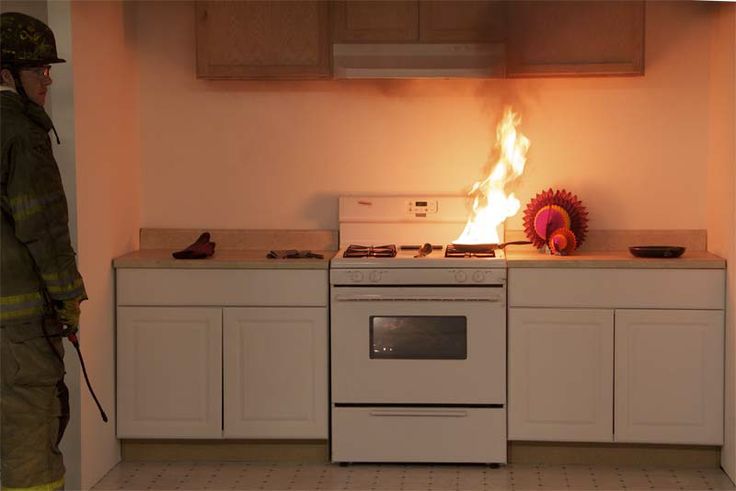
Just get out! When you leave, close the door behind you to help contain the fire.
- Call 9-1-1 to alert the local fire department
- If you try to fight the fire, be sure others are getting out and you have a clear way out.
- Keep a lid nearby when you’re cooking to smother small grease fires. Smother the fire by sliding the lid over the pan and turn off the stovetop. Leave the pan covered until it is completely cooled.
- For an oven fire, turn off the heat and keep the door closed.
If you have any questions about fire safety, please feel free to contact your local fire department.

“FIRE PREVENTION WEEK. PREVENT KITCHEN FIRES” is NFPA’s official theme for Fire Prevention Week (FPW) 2013, October 6-12, 2013. This year’s theme “Prevent Kitchen Fires”, will focus on spreading the word that more fires start in the kitchen than in any other part of the home – and show people how to keep cooking fires from starting in the first place. Here are some interesting fire facts:
Home Fires
- In 2011, U.S. fire departments responded to 370,000 home structure fires. These fires caused 13,910 civilian injuries, 2,520 civilian deaths, $6.9 billion in direct damage.
- On average, seven people die in U.S. home fires per day.
- Cooking is the leading cause home fires and home fire injuries, followed heating equipment. Smoking is a leading cause of civilian home fire deaths.
- Most fatal fires kill one or two people. In 2011, 12 home fires killed five or more people resulting in a total of 67 deaths.
Cooking
- U.S. Fire Departments responded to an estimated annual average of 156,600 cooking-related fires between 2007-2011, resulting in 400 civilian deaths, 5,080 civilian injuries and $853 million in direct damage.
- Two of every five home fires start in the kitchen.
- Unattended cooking was a factor in 34% of reported home cooking fires.
- Two-thirds of home cooking fires started with ignition of food or other cooking materials.
- Ranges accounted for the 58% of home cooking fire incidents. Ovens accounted for 16%.
- Children under five face a higher risk of non-fire burns associated with cooking than being burned in a cooking fire.
- Microwave ovens are one of the leading home products associated with scald burn injuries not related to fires. Nearly half (44%) of the microwave oven injuries seen at emergency rooms in 2011 were scald burns.
- Clothing was the item first ignited in less than 1% of home cooking fires, but these incidents accounted for 16% of the cooking fire deaths.
Heating
- The leading factor contributing to heating equipment fires was failure to clean, principally creosote from solid fueled heating equipment, primarily chimneys.
- Portable or fixed space heaters, including wood stoves, were involved in one-third (32%) of home heating fires and four out of five (80%) home heating deaths.
- Half of home heating fire deaths resulted from fires caused by heating equipment too close to things that can burn, such as upholstered furniture, clothing, mattresses or bedding.
- In most years, heating is the second leading cause of home fires, fire deaths, and fire injuries. Fixed or portable space heaters are involved in about 4 out of 5 heating fire deaths.
Smoking Materials
- During 2007-2011 smoking materials caused an estimated 17,900 home structure fires, resulting in 580 deaths, 1,280 injuries and $509 million in direct property damage, per year.
- Sleep was a factor in one-third of the home smoking material fire deaths.
- Possible alcohol impairment was a factor in one in five of home smoking fire deaths.
- In recent years, Canada and the United States have required that all cigarettes sold must be “fire safe,” that is have reduced ignition strength and less likely to start fires.
Electrical
- About half (49%) of home electrical fires involved electrical distribution or lighting equipment. Other leading types of equipment were washer or dryer, fan, portable or stationary space heater, air conditioning equipment water heater and range.
- Electrical failure or malfunctions caused an average of almost 50,000 home fires per year, resulting in roughly 450 deaths and $1.5 billion in direct property damage.
Candles
- During 2007-2011 candles caused 3% of home fires, 4% of home fire deaths, 7% of home fire injuries and 6% of direct property damage from home fires.
- On average, there are 32 home candle fires reported per day.
- Roughly one-third of these fires started in the bedroom; however, the candle industry found that only 13% of candle users burn candles in the bedroom most often.
- More than half of all candle fires start when things that can burn are too close to the candle.
Escape Planning
- According to an NFPA survey, only one-third of Americans have both developed and practiced a home fire escape plan.
- Almost three-quarters of Americans do have an escape plan; however, more than half never practiced it .
- One-third of Americans households who made and estimate they thought they would have at least 6 minutes before a fire in their home would become life threatening. The time available is often less. And only 8% said their first thought on hearing a smoke alarm would be to get out!
Smoke Alarms
- Almost two-thirds (62%) of reported home fire deaths resulted from fires in homes with no smoke alarms or no working smoke alarms.
- Working smoke alarms cut the risk of dying in reported home fires in half.
- In fires considered large enough to activate the smoke alarm, hardwired alarms operated 92% of the time, while battery powered alarms operated only 77% of the time.
It is important to have and practice a home fire escape plan that prepares your family to think fast and get out quickly when the smoke alarm sounds. What if your first escape route is blocked by smoke or flames? That’s why having two ways out is such a key part of your plan. An emphasis will be placed on reminding families to practice their home fire escape plan at least twice a year.
The reality is that when fire strikes, your home could be engulfed in smoke and flames in just a few minutes. Resources for developing and practicing a home fire escape plan and other fire safety tips may be obtained by visiting www.firepreventionweek.org.
The E.S.C.A.P.E. Fire Safety Team including Jake the Fire Safety Dog (www.jakethefiredog.org) will continue their fire safety outreach efforts and appearances in area schools and throughout communities in Michigan, Massachusetts and Southern New Hampshire to promote the 2013 Fire Prevention Week theme from early May through early November, 2013. You may follow our travels and keep up to date with safety tips by visiting us on Facebook or on our page on WOTV4Women.
History
Fire Prevention Week was established to commemorate the Great Chicago Fire, the tragic 1871 conflagration that killed more than 250 people, left 100,000 homeless, destroyed more than 17,400 structures and burned more than 2,000 acres. The fire began on October 8, but continued into and did most of its damage on October 9, 1871.
According to popular legend, the fire broke out after a cow – belonging to Mrs. Catherine O’Leary – kicked over a lamp, setting first the barn, then the whole city on fire. Chances are you’ve heard some version of this story yourself; people have been blaming the Great Chicago Fire on the cow and Mrs. O’Leary, for more than 130 years. But recent research by Chicago historian Robert Cromie has helped to debunk this version of events.
The ‘Moo’ Myth
Like any good story, the ‘case of the cow’ has some truth to it. The great fire almost certainly started near the barn where Mrs. O’Leary kept her five milking cows. But there is no proof that O’Leary was in the barn when the fire broke out – or that a jumpy cow sparked the blaze. Mrs. O’Leary herself swore that she’d been in bed early that night, and that the cows were also tucked in for the evening.
But if a cow wasn’t to blame for the huge fire, what was? Over the years, journalists and historians have offered plenty of theories. Some blamed the blaze on a couple of neighborhood boys who were near the barn sneaking cigarettes. Others believed that a neighbor of the O’Leary’s may have started the fire. Some people have speculated that a fiery meteorite may have fallen to earth on October 8, starting several fires that day – in Michigan and Wisconsin, as well as in Chicago.
In 1920, President Woodrow Wilson issued the first National Fire Prevention Day proclamation, and since 1922, Fire Prevention Week has been observed on the Sunday through Saturday period in which October 9 falls. According to the National Archives and Records Administration’s Library Information Center, Fire Prevention Week is the longest running public health and safety observance on record. The President of the United States has signed a proclamation proclaiming a national observance during that week every year since 1925.
NFPA has been the official sponsor of FPW for nearly 90 years.
Fire Prevention Week themes over the years:
NBFU 1927 Why this Mad Sacrifice to Fire?
NBFU 1928 FIRE…Do Your Part – Stop This Waste!
NBFU 1929 FIRE – The Nation’s Greatest Menace! Do Your Part to Stop This Waste!
NBFU 1930 Fight Fire Waste with Fire Prevention. Do Your Part
NBFU 1931 Do Your Part to Prevent Fire
NBFU 1932 Your Life. Your Property
1933 Your Life. Your Property
1934 Now War on Fire
1935 What Would Fire Mean to You?
1936 Stop It
1937 Help Prevent Fires
1938 Is This Your Tomorrow?
1939 Was Somebody Careless?
1940 Keep Fire In Its Place
1941 Defend Against Fire
1942 Today Every Fire Helps Hitler
1943 Fires Fight for the Axis! (to emphasize home fire prevention)
Feed Fighters Not Fires (farm and rural campaign)
The War’s Over for This Plant (industrial use)
Was Somebody Careless? (general purpose)
1944 To Speed Victory – Prevent Fires (general purpose)
Feed Fighters, Not Fires! (farm and rural)
To Speed Victory, Defeat Fire (town plaster)
1945 We Burned the Enemy – Now Save Yourself from Fire
1946 FIRE is the Silent Partner of Inflation
1947 YOU caused 1,700,000 Fires last Year!
1948 Help Yourself to Fire Prevention!
1949 Flameproof Your Future!
1950 Don’t Let Fire Lick You
1951 Defend America From Fire
1952 Be Free From Fear of Fire
1953 Fire Feeds on Careless Deeds
1954 Let’s Grow Up – Not Burn Up
1955 Don’t Give Fire A Place to Start
1956 Don’t Give Fire a Place to Start
1957 Make Sure of Their Tomorrows – Don’t Give Fire a Place to Start
1958 Don’t Give Fire a Place to Start
1959 Fire Prevention is Your Job…Too
1960 Don’t Give Fire a Place to Start
1961 Don’t Give Fire a Place to Start
1962 Fire Prevention is Your Job…Too
1963 Don’t Give Fire a Place to Start
1964 Fire Prevention is Your Job…Too
1965 Don’t Give Fire a Place to Start
1966 Fight Fire
1967 Fire Hurts
1968 Fire Hurts
1969 Fire Hurts
1970 Fire Hurts
1971 Fire Hurts
1972 Fire Hurts
1973 Help Stop Fire
1974 Things That Burn
1975 Learn Not to Burn
1976 Learn Not to Burn
1977 Where There’s Smoke, There Should Be a Smoke Alarm
1978 You Are Not Alone!
1979 Partners in Fire Prevention
1980 Partners in Fire Prevention
1981 EDITH (Exit Drills In The Home)
1982 Learn Not To Burn – Wherever You Are
1983 Learn Not To Burn All Through the Year
1984 Join the Fire Prevention Team
1985 Fire Drills Save Lives at Home at School at Work
1986 Learn Not to Burn: It Really Works!
1987 Play It Safe…Plan Your Escape
1988 A Sound You Can Live With: Test Your Smoke Detector
1989 Big Fires Start Small: Keep Matches and Lighters in the Right Hands
1990 Keep Your Place Firesafe: Hunt for Home Hazards
1991 Fire Won’t Wait…Plan Your Escape.
1992 Test Your Detector – It’s Sound Advice!
1993 Get Out, Stay Out: Your Fire Safe Response
1994 Test Your Detector For Life
1995 Watch What You Heat: Prevent Home Fires!
1996 Let’s Hear It For Fire Safety: Test Your Detectors!
1997 Know When to Go: React Fast to Fire
1998 Fire Drills: The Great Escape!
1999 Fire Drills: The Great Escape!
2000 Fire Drills: The Great Escape!
2001 Cover the Bases & Strike Out Fire
2002 Team Up for Fire Safety
2003 When Fire Strikes: Get Out! Stay Out!
2004 It’s Fire Prevention Week! Test Your Smoke Alarms
2005 Use Candles With Care
2006 Prevent Cooking Fires: Watch What You Heat
2007 It’s Fire Prevention Week! Practice Your Escape Plan
2008 It’s Fire Prevention Week! Prevent Home Fires
2009 Stay Fire Smart! Don’t Get Burned
2010 Smoke Alarms: A Sound You Can Live With
2011 It’s Fire Prevention Week! Protect Your Family From Fire!
2012 Have 2 Ways Out! 2013 Prevent Kitchen Fires
“Reproduced from NFPA’s Fire Prevention Week Web site, www.firepreventionweek.org. ©2013 NFPA.”
Read More

People can survive even major fires in their homes if they are alerted to the fire in time and know what to do and how to ESCAPE. In a recent NFPA survey, half the people responding said their family had a fire escape plan, but only 16 percent said they had practiced it.
Survival is Simple
-
Install smoke alarms and keep them in working order.
-
Make an Escape plan and practice it.
-
React immediately at the first sign of a fire.
Plan Your Escape
There’s no time for planning during a fire emergency. Sit down with your family today and make a step-by-step plan for escaping a fire.
Draw a floor-plan of your home, marking two ways out (including windows) of every room – especially sleeping areas. Discuss the escape routes with every member of your household.
Agree on a meeting place outside your home where every member of the household will gather after escaping a fire to wait for the fire department (i.e. front yard, mailbox, driveway, sidewalk, etc.). This allows you to count heads and inform the fire department if anyone is missing or trapped inside the burning building.
IMPORTANT: Practice your Escape plan at least twice a year. Have a fire drill in your home. Appoint someone to be monitor and have everyone participate. A fire drill is not a race. Get out quickly, but carefully.
Make your exit drill realistic. Pretend that some exits are blocked by fire and practice using alternative escape routes. Pretend that the lights are out and that some Escape routes are filling with smoke.
Be Prepared
Make sure everyone in the household can unlock all doors and windows quickly, even in the dark. Windows or doors with security bars need to be equipped with quick-release devices and everyone in the household should know how to use them.
If you live in an apartment building, use stairways to Escape. Never use an elevator during a fire. It may stop between floors or take you to a floor where the fire is burning. Some high-rise buildings may have evacuation plans that require you to stay where you are and wait for the fire department.
If you live in a two-story house and you must Escape from a second-story window, be sure there is a safe way to reach the ground. Make special arrangements for children, older adults, and people with disabilities. People who have difficulty moving should have a phone in their sleeping area and, if possible, should sleep on the ground floor.
Doors need to be tested before opening them. While kneeling or crouching at the door, reach up as high as you can and touch the door, the knob, and the crack between the door and its frame with the back of your hand. If the door is warm, use another Escape route. If the door is cool, open it with caution. Put your shoulder against the door and open it slowly. Be prepared to slam it shut if there is smoke or flame on the other side.
If you are trapped, close all doors between you and the fire. Stuff the cracks around the doors to keep out smoke. Wait at a window and signal for help with a light-colored cloth or a flashlight. Do not break out the window as you may need to close it. If there’s a phone in the room, call the fire department and tell them exactly where you are.
Get Out…
In case if fire, don’t stop for anything. Do not try to rescue possessions or pets. Leave the building, go directly to your meeting place, and then call the fire department from a neighbor’s phone, a portable or cellular phone, or an alarm box. Every member of your household should know how to call the fire department.
Crawl low under smoke. Smoke contains deadly gases, and heat rises. During a fire, cleaner air will be near the floor. If you encounter smoke when using your primary exit, use an alternate Escape route. If you must exit through smoke, crawl on your hands and knees, keeping your head 12 to 24 inches (30 to 60 centimeters) above the floor.
… and Stay Out
Once you are out of your home, don’t go back for any reason. If people are trapped, the firefighters have the best chance of rescuing them. The heat and smoke of a fire are overpowering. Only trained firefighters have the experience and protective equipment needed to enter burning buildings.
Play It Safe
More than half of all fatal home fires happen at night while people are asleep. Smoke alarms sound an alarm when they sense smoke from a fire, alerting people before they are trapped or overcome by smoke. With smoke alarms, your risk of dying in a home fire is cut nearly in half. Install smoke alarms outside every sleeping area and on every level of your home, including the basement. Follow installation instructions carefully and test smoke alarms monthly. Some manufacturers suggest changing the batteries at lease once a year, however E.S.C.A.P.E., Inc. encourages you to change the batteries twice a year, in the fall and in the spring when the time changes (change your clocks, change your batteries). If your alarm is more than 10 years old, replace it. For complete home protection, consider installing an automatic fire sprinkler system.
Read More